

19th Global CemFuels Conference 2026
23 - 24 September 2026, Geneva, Switzerland
The 19th Global CemFuels Conference, Exhibition and Awards has taken place in Geneva, Switzerland, with 175 delegates from 33 countries, 29 exhibitors, 19 presentations, 12 hours of networking opportunities and one fondue-tastic awards dinner. The 20th Global CemFuels Conference will take place in Krakow on 29-30 September 2027 in Krakow, Poland.
The day before the conference opened, Stéphane Poellaer and Michel Hinkel of Alterline conducted a day of training on the basics of the use of alternative fuel (AF) in cement manufacture.
The next day, Geert Jan Pastoor of Pastoor Consult opened the conference with an overview of refuse-derived fuel (RDF) market trends in Europe. The cement industry’s main competitor for RDF is the waste-to-energy (WtE) sector. 500 waste to energy plants operate in Europe, burning around 100Mt/yr of waste, with WtE plants still being constructed, notably in Poland and the UK. The main exporters of RDF in Europe are the UK and Italy, with rail and truck used for transporting bales of material. Major current importers include Germany, Netherlands, Denmark and Sweden. Exports from the UK are decreasing as the country starts to import waste for its many WtE plants.
Laurent Desroches of Veolia (a company with 216,000 employees, working in water, waste and energy, producing 2.4Mt of AF in 82 sites worldwide) spoke about the legal situation of solid recovered fuel (SRF) in Europe. The Waste Framework Directive allows waste, once treated, to legally become a product or raw material again, facilitating transport, sales and use without further administration, provided it complies with four conditions: specific use, market or demand, technical compliance and safety. However, individual European countries have their own regulations about end-of-waste status, somewhat complicating the picture. Additionally, once a material is no longer considered as a waste, it must comply with the EU’s REACH regulations. However, Laurent suggested that it is impossible to describe such a heterogeneous material as SRF under the regulations. In fact, startlingly, he suggested that AF should remain as ‘waste,’ since users are relatively happy to deal with AF under waste regulations. The Renewable Energy Directive stipulates that 42.5-45% of energy production in the EU must come from renewable energy by 2030, with biomass counting as a renewable source. Arguments still rage about the regulatory treatment of wood and wood-derived materials. Laurent called for regulators to simplify certifications and to harmonised key definitions at EU and member-state levels. He suggested that traceability must be improved, and that SRF should retain its status as a ‘waste’ to avoid illegal off-takers.
Yves Decelles of the European Recycled Fuel Organisation ERFO reminded delegates that 12Mt of AF is used in European cement plants each year, but that 50Mt of municipal solid waste (MSW) is lost to landfills annually. ERFO suggests that this and industrial waste could be used to produce an additional 20Mt of SRF/RDF each year. Yves pointed out that 57% of energy consumed in the EU is imported fossil fuel. Since May 2026, exports of plastic waste outside OECD countries have effectively been forbidden, all but halting exports to Asia, although the export ban will be reviewed in 2029, leading to uncertainty. Previous importers included Malaysia, Vietnam and Türkiye. The ban should lead to increased recycling of plastics within OECD countries, as well as increased production of RDF/SRF, and an increase of plastic content in WDF. A total of nine countries in the EU have taxes on tonnages of waste incinerated at WtE plants, but rates vary from country to country and may be in the form of CO2 taxes, distorting markets in the EU. Additionally, the EfW (incineration and co-incineration of MSW) sectors are due to be included in the EU ETS, albeit with free allocation of permits for district heating until 2035. The reaction of the markets to the inclusion of EfW in the EU Emission Trading Scheme (ETS) is currently unknown, but may increase tonnages going to landfill and may increase bills to consumers.
Pier Cella from Entsorga next started by saying that cement production is unavoidable, and so must be decarbonised. “Waste is a climate problem before it becomes a resource,” he said, since landfills emits the powerful greenhouse gas methane. Better, he concluded, to utilise materials as AF that otherwise would go to landfill. A kiln that depends on imported coal or petcoke is exposed to the same volatility that drives inflation, shipping disruption and geopolitical bargaining power, as shown by the closure of the Strait of Hormuz and partial closure of the Bab Al Mandeb (‘the gate of tears’). The EU cement industry aims for up to 95% thermal substitution rate (TSR) by 2050 - a tough target to meet given current levels, which are partly constrained by permitting and regulations. In contrast, the US, India, China and Southeast Asia have AF TSR of less than 15%. Pier mentioned his company’s own solutions for mechanical-biological treatment (MBT) of municipal solid waste (MSW) for the production of AF.
Michele Graffigna of waste handler and producer of AF Herambiente next spoke about the export-dependent RDF/SRF Italian market, which is facing new challenges from the ‘plastic recycling crisis.’ Italy produces around 30Mt of MSW each year, concentrated in the north of the country, with good rates of recycling, but with an under capacity for recycling in the south. Italy is a major exporter, sending 1.7Mt of SRF/RDF abroad each year, mainly to Scandinavia, but also to the Netherlands and Germany due to import taxation and ETS implementation. Cheap virgin polymer coming from China and the US is undercutting the price of recycled plastics, making recycling less economic and giving rise to the plastics recycling crisis. This has led to closure of plastics recyclers in the UK and the EU, and very large stockpiles of plastics. Rising oil prices due to Middle Eastern wars will make virgin plastic more expensive, but this is likely to be a short-term effect (although a majority of the audience, by a show of hands, thought that the US war on Iran would continue for at least another year). Plastics collection is likely to be halted in due course in several areas in Italy, there being no profit in plastics recycling at the moment.
Ahsan Anis, Power Cement, revealed how his company had built and enacted its AF strategy in Pakistan. The country has a TSR of 1%, compared to the global mean of 23%, due to a lack of household level waste segregation, high moisture levels in MSW, lack of government support and competition from the informal sector. Power Cement’s approach was to first identify biomass input streams that would be available throughout the year, be easy to store and have manageable moisture levels. Mustard straw, rice husk and sesame straw were eventually chosen. Subsequent steps included a process audit, feeding and injection arrangements, measuring CO2 mitigation and social value, and tackling seasonal biomass storage. For this, the company built large storage piles, put a clay capping layer on top and made arrangements for fire suppression. Trials started in 2023 leading to scale-up and industrial scale usage in 2026. The company’s plant has used 103,781t of biomass from 2023 to June 2026 and reached a peak TSR of 25%.
Stéphane Poellaer and Michael Hinkel, Alterline, drilled into the top three main reasons of AF project failure: an inadequate waste/AF market study; kiln process optimisation/upgrades; and feeding and pre-processing line design issues. On market studies common issues included a lack of on-the-ground data, over-reliance on online/AI research, not thinking about seasonality and/or AF type characteristics, transport costs and the reliability of potential suppliers and partners. They then identified a large number of production line changes from optimisation steps and equipment upgrades. They also noted several areas where upgrades were generally assessed to be not worth the cost for an AF project. These included calciner upgrade/enlargement and replacing an electrostatic precipitator for a baghouse. Finally, attention was paid to feeding and pre-processing lines. “Simple is beautiful” was the mantra, with a warning given to avoid dosing multiple AFs using a manual loader. Stable AF dosing, avoid fuel starvations and a focus on reliability were all considered vital.
Ray Nobles and Sussan Pasuki of Heidelberg Materials explained that their company has recently created a Decarbonisation Unit that advises AF projects across the group, as well as on secondary cementitious materials and alternate raw materials. The company had a TSR of 34% in 2025 and has a target of 50% in 2030. They approach AF using four levels: secure permits; enrich fuel mix; explore partnerships (JVs and M&As) and secure AF supply chains. They then discussed regional differences such as the EU potentially softening on CO2 caps and the US actively investing in fossil fuel production. They placed the cement sector as a solution for the world’s growing volumes of waste as regions develop and welcomed new waste management legislation in India from April 2026. They then gave examples of partnerships with local government in Indonesia to manage RDF production. In summary the speakers reinforced that Heidelberg Material is actively seeking joint-ventures in the field in Europe, Asia and Africa.
Rainer van der Beek, KIMA Process Control, talked about how AF usage stresses kiln operating conditions including potentially creating hot and overheated areas on the shell. Air cooling-based methods of cooling a kiln shell rely on convection. Water cooling approaches use evaporation for the cooling effect and Van der Beek said this was significantly more efficient in absorbing heat than air. Kima’s KilnCooler product uses an infrared sensor to detect hotspots, a controller to manage the logic and pinpoint the specific location to be targeted, and a nozzle to apply a jet of water. It is available in mobile and stationary units.
CemFuels Awards Dinner
In the evening of the first day of the conference, delegates travelled via Lake Geneva and its famous fountain to the renowned Edelweiss restaurant for an evening of fondue, as well as alpenhorn and accordion music. Alas, there was no yodelling. However, during the evening the Global CemFuels Awards were presented.
The alternative fuels-using company of the year was Titan Group, and the fuels supplier of the year was Veolia. The outstanding alternative fuel project of the year was Finnsementti’s Lappeenranta project (with Lindner). The award for most innovative technology for alternative fuel use was named as the Pyrorotor from KHD Humboldt Wedag. Holcim-Geocycle was presented with the award for ‘Outstanding contribution for the promotion of alternative fuels.’ As has become traditional, a number of sector stalwarts were named as Global Fuels Personalities of the Year in 2026, and they were: Emma Catton of WKE; Svetoslav Chopov of Di Matteo; Thomas Jennewein of Vecoplan; and Lars Jennissen of N+P. Alternative fuel discussions continued late into the night.
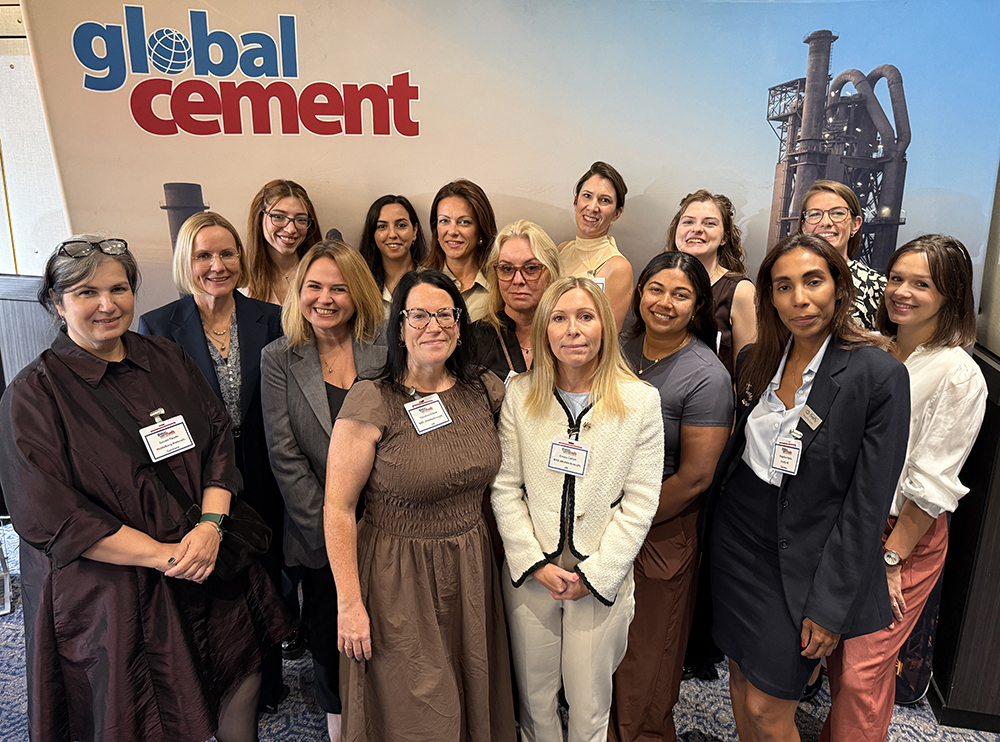
Below: Ladies of alternative fuels at the Global CemFuels Conference 2026
Second day
Matthias Schumacher of aixprocess and Hannes Uttinger of A TEC (companies under the Loesche Group) started the second day by suggesting the means to achieve 100% TSR. In order of increasing sophistication (and TSR), producers on a quest for 100% TSR must master fuel availability and logistics, fuel quality and variability, chlorine, sulphur and alkali cycles, kiln stability and clinker quality, combustion and the burner, and fuel mix management. However, there is no ‘one-size-fits-all’ solution for high-TSR operation, and local factors must be taken into account. “The highest TSR is not achieved by just installing more equipment, but by addressing the right constraint.” Stable calciner operation is a must for high AF firing: Gas retention time is a poor indicator of calciner performance, and instead it is the particle residence time that is the most important factor for full fuel burnout. Upgrading the physical condition of the fuel - removing 3D particles, reducing moisture content, improving particle surface area and size distribution - is an important step to increase TSR.
Lars Jennissen of N+P gave an update on high-end AF to drive towards 100% TSR. Milled AF with 100% of particles below 8mm and a density of 300kg/m3 has been successfully used at high TSR. A new fuel, ‘Fulite,’ has particle size of 90% <3mm, density of 450kg/m3 and the ability to use 100% of this fuel at the main burner - and is free flowing and easy to handle and dose. Demand for biogenic content is increasing, but availability is a problem which may impact costs.
Magnus Schou of CM Biomass pointed out that fossil fuels have spiked in price over the last few years, due to Russia’s war in Ukraine and the US-led war on Iran and wider Middle Eastern conflict. Magnus contrasted this with the relative stability of biomass-based fuels. Lignite and coal production in Europe will end in the next few years, so that biomass demand has significantly increased. Cashew nut shells have CV of 21MJ/t, and 125kt/yr can be supplied by 15,000dwt ships from Ivory Coast, usable for 50-60% of the fuel in the calciner. Other biomass suitable for cement production include peanut pellets, sugar cane bagasse pellets, sunflower pellets and HTG pellets (hybrid tropical grass), all of which have high CV and low ash content. Additional biomass includes palm kernel shells, dried olive cake and olive pits. Pricing starts from around €110/t (dried olive cake) to €175/t and up for cashew nut shells.
Luigi Di Matteo of the Di Matteo Group next spoke on solutions for AF preparation, handling and dosing. Most often installations may have problems due to equipment being volumetrically undersized due to bulk density being lower than expected, flow problems due to high wall and internal friction; flow problems in storage and bunkers because of compressibility and time consolidation; and non-optimum combustion, often due to agglomerated AF. Being aware of these problems and preparing for them can avoid many problems. The new AirSEP air separator is designed to separate non-combustibles from viable AF, “Like a giant vacuum cleaner.” The in-line air separator, IPS, is on a smaller scale, but improves fuel quality and flame stability.
Leoš Volesky of Beumer Group Czech Republic also spoke about challenges in the use of AF. The company offers solutions for all areas of AF handling and feeding, from reception, through preparation and onwards towards the burner floor.
Yong Cheng of Sinoma-CDI gave an overview of his company’s involvement in the sector. In 2015 it installed a step pre-combustion furnace at a site in Wu’an, China, allowing a TSR of around 20%. Calciner-dosed AF projects in Egypt in the early 2020s reached a TSR of 50% and 65% respectively. Then in 2025 it achieved a TSR of 80% at a Southern Centre plant in Shanggao, China. The production line had a clinker design capacity of 4500t/day with a five-stage preheater, calciner volume of 2200m3, no bypass system and a pre-existing direct AF feeding system with a capacity of 7 – 8t/hr. The three main AFs that the site uses include waste textiles, industrial waste and MSW. The existing storage shed was reused but a chain conveyor, a belt conveyor and belt weigher, a belt conveyor and magnetic separator were all added. The line also installed a chlorine bypass.
Felix Ge of Harden Machinery started by noting that global cement production capacity is concentrated in China. Six large companies hold 828Mt/yr or 48% of China’s national capacity. The country’s mean TSR is 8%, low by European levels, but there are 436 co-processing production lines. TCC leads with a TSR of 19%, followed by Huaxin Cement at 15%, Hongshi Holding Group at 14% and Conch Group at 8%. The country has plenty of waste but the quality is low, with more complex material composition, more hard-to-shred and sort materials, an immature AF supply chain and a lack of standards. Ge identified these as the key challenges opposing higher TSR rates in the country. China currently has a target of 20% of cement production lines using AF by 2025 and 40% by 2030 – that is the percentage of lines, not the TSR. Harden has supplied equipment to 18 lines operated by Huaxin Cement, including 31 shredders. The highest TSR in the group, 63%, has been reported at the Huaxin Diwei plant in Chongquing City. Here, textiles, plastics, leather and hazardous waste are injected into the calciner (264t/day) and main burner (48t/day). Harden has supplied 24 AF lines in two years to Hongshi, including 52 shredders.
Sunil Kumbhar, AltSF Process, presented details on his company’s work at Cimpor’s Souselas plant in Portugal that was completed in June 2025. The scope included an automated grab crane, dual extraction and weighing machines, a belt conveyor, a side walls belt conveyor, a metallic apron conveyor and a RalFEED feeding system, giving an AF feeding capacity of 25t/hr. AF used with the system include shredded tyres, RDF pellets and biomass with a density of 0.1 - 0.5 t/m3 and a moisture content up to 21%. AltSF Process has two decades of experience in India working with low quality waste often with a high moisture content. It holds international references in the Republic of the Congo, Kuwait, Nigeria, Senegal, Turkey and UAE.
Daniel Wresnik of UNTHA provided details on the SR2000XC and SR3000XC secondary shredders that were launched in May 2026. Key innovations include a pusher-free design to reduce energy consumption, a new rotor design with a larger diameter (1000mm) and a lower rotation speed (250rpm), a changeable wear plate, a direct drive concept using a clutch and other changes. A reference for the SR2000XC shredder has a 250kW motor and has been used with prepared commercial and industrial waste, mainly plastics, with an input density of 50-70kg/m3 and a throughput of 6t/hr. A reference for the SR3000XC shredder with two 250kW motors has been used with similar input materials with an input density of 120kg/m3 and a throughput of 14t/hr.
Ari Nyrökorpi, BMH Technology looked at his company’s new 8500-series shredder. The T8504 model is a single-rotor shredder designed for one-phase shredding or primary shredding of ICW, pre-sorted MSW and single stream materials. Key features include the company’s Zero Gap technology and its Massive Impact Protection System (MIPS). The former is intended to cope with difficult material such as films and foils and produce a consistent particle size. The latter allows for the automatic rejection of large tramp objects. Pure Planet in Portugal bought the first shredder in the series as part of a SRF production line. It starts with a T8504 shredder with particle size <150mm, two 134kW motors and an output of 15 – 30t/hr. This is followed by a discharge conveyor, an air classifier, a T1200 fine shredder and then an outfeed conveyor. Future developments for the range include a higher-powered model with 180kW motors, a version with smaller knives to allow for particle sizes <100mm and a new gearbox configuration.
An audience and panel discussion was held at the end of the programme to examine some of the themes that had been raised at the conference, which concentrated on the ongoing discussion of ‘waste’ versus product status of AF, as well as looking at market dynamics in a geopolitically unstable world.
Prizes and farewells
After the conclusion of the programme, delegates gathered for farewell drinks and prize-giving. After correcting for audience numbers at each presentation, the authors from Alterline – Stéphane Poellaer and Michael Hinkel - were awarded third prize, while another ‘tag team’ of presenters, Matthias Schumacher of aixprocess and Hannes Uttinger of A TEC, were awarded second prize. However, for a revelatory presentation and eloquent answers to hard questions, Felix Ge of Harden Machinery was awarded the prize for best presentation.
Field trip to Holcim’s Eclépens plant
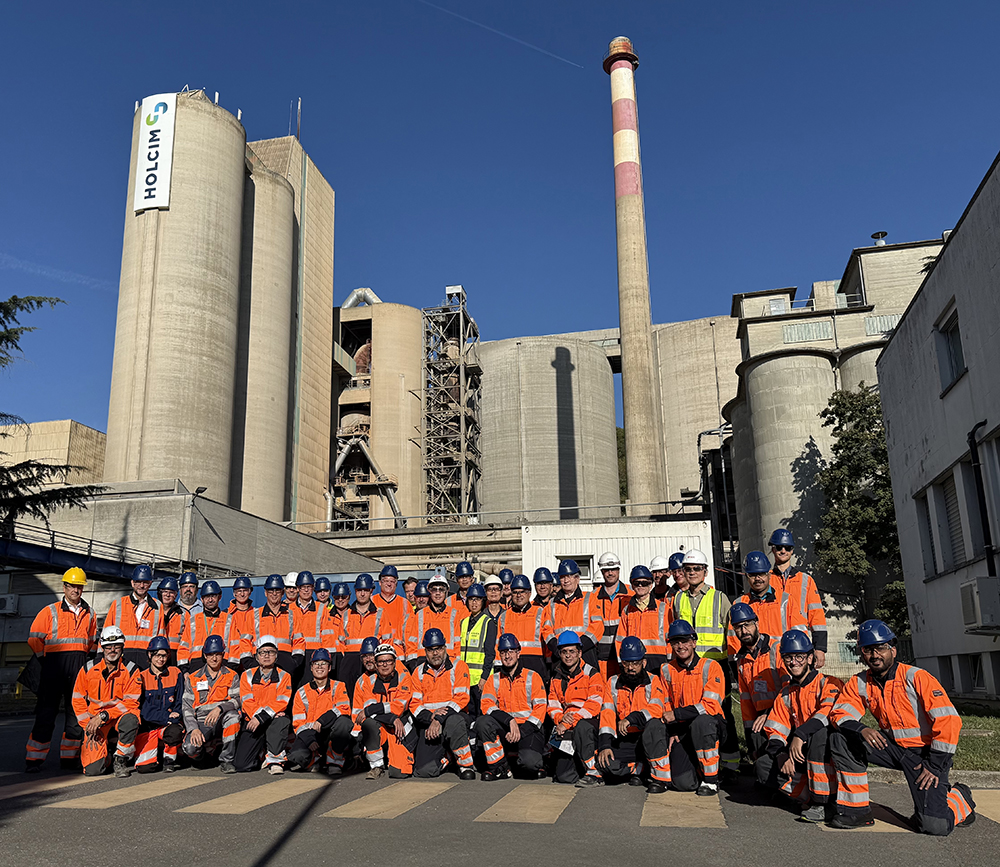
The day after the conference, 50 delegates made the short trip to Holcim’s Eclépens cement plant near Lausanne, pictured below. After being fitted with very thorough PPE, the participants had a full tour of the plant and its AF handling areas, with all of their many questions answered in full by the knowledgeable plant staff, led by Luis Sanchez Bolibar, the plant manager.
Conclusions
The conference, exhibition, awards and field trip were strongly praised by delegates for their slick organisation, strict time-keeping, technical content and fantastic opportunities for networking. The 20th Global CemFuels Conference will take place in Krakow on 29-30 September 2027 in Krakow, Poland.
What the delegates said about CemFuels in Geneva, 2026:
As always perfectly organised
Great people meeting to reach a common goal
Good organisation
Thank you very much for the excellent organisation and moderation
Since 15y+ the place to be for AF stakeholders
Friendly organisers
Excellent
Great conference and networking
Good atmosphere and good moderators
Reeeally good
We always look forward to the conference
Interesting highlights... and a very dynamic and pleasant moderator. Congrats
An easy-going yet very professional event
We are family!
Professionally planned and expertly executed. A very warm and friendly organising team.